
Lithuanian Airports Lead Green Transition: Sustainable Aviation Fuel Powers All Departing Flights
- News
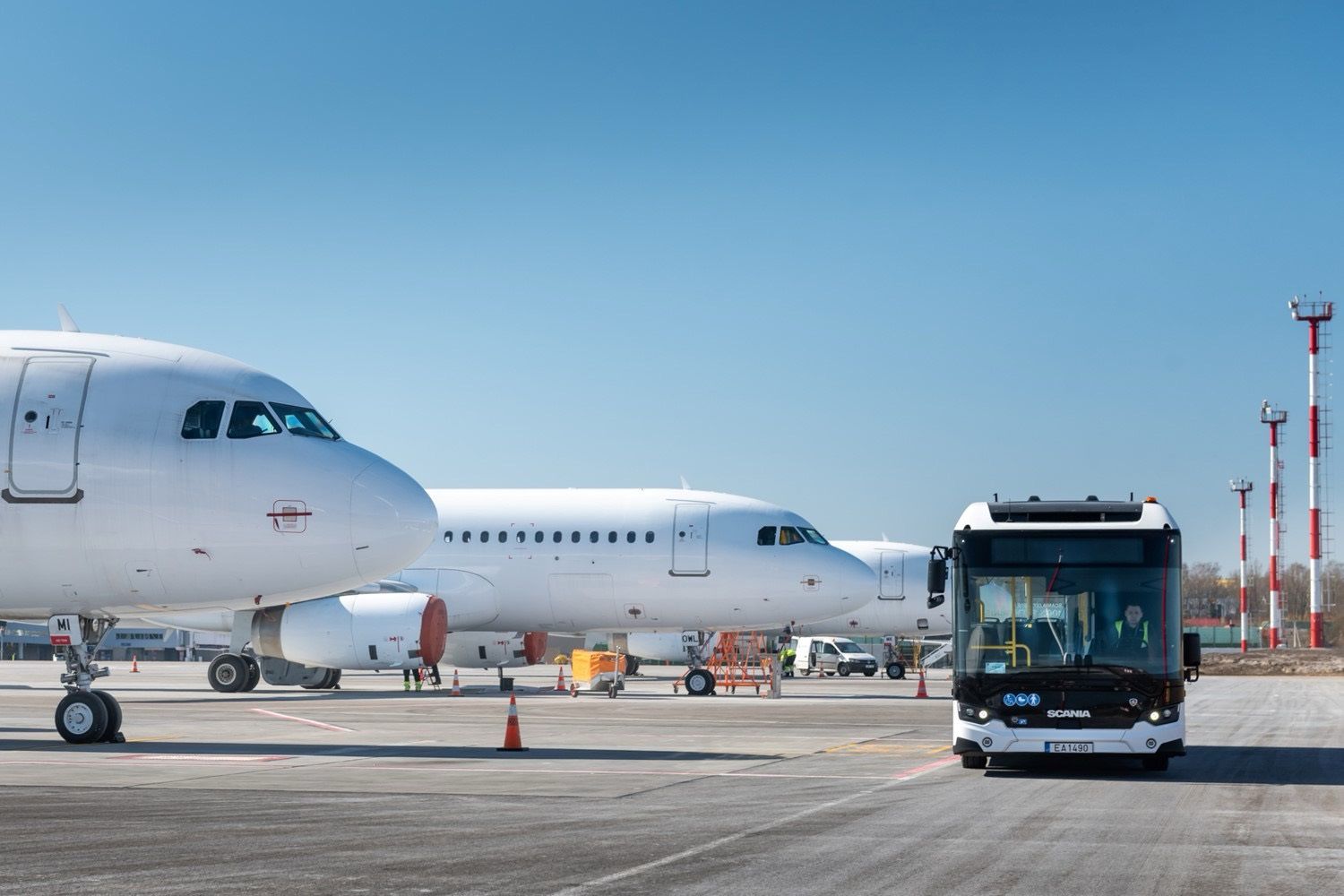
At Lithuanian Airports (LTOU), aviation fuel suppliers, in cooperation with Orlen Lietuva, have started supplying sustainable aviation fuel (SAF) to all airlines. The fuel is already being delivered to storage facilities at Vilnius, Kaunas, and Palanga airports and is available for all departing aircraft.
What is Sustainable Aviation Fuel (SAF) and why is it important?
The introduction of SAF at LTOU gives airlines and passengers the opportunity to choose more sustainable travel while contributing to the European Union’s (EU) climate goals.
SAF is produced from renewable or waste-based feedstocks such as used cooking oil, as well as industrial and agricultural waste. When blended with conventional jet fuel, it is fully compatible with existing aircraft engines, meaning airlines can use it immediately without any additional technological adjustments.
“This change is extremely important for us, because from now on every aircraft departing from our airports contributes more to Europe’s sustainability goals. At the same time, every passenger flying from our airports also plays a role in supporting these ambitions. It also matters to us because we are successfully implementing our organization’s Net Zero strategy – confirming our commitment to become a climate-neutral organization by 2050 at the latest, i.e. achieving net-zero carbon dioxide (CO2) emissions from airport operations,” says Modestas Alekna, LTOU Sustainable Aviation Projects Manager.
According to LTOU, the transition to SAF is one of the most effective measures to reduce CO2 emissions in aviation. It is forecast that as SAF technologies advance and the fuel becomes more widely available, its use will continue to grow and eventually replace conventional jet fuel entirely. Research shows that long-term use of SAF (by 2050) could cut overall aviation CO2 emissions by more than half.
SAF meets all aviation safety requirements, just like traditional jet fuel, but CO2 emissions from SAF are around 80–90% lower compared to fossil fuels.
Meeting European Union targets
By securing SAF supply, LTOU is complying with the EU’s ReFuelEU Aviation regulation, which stipulates that at larger airports across the continent, SAF must account for at least 2% of all aviation fuel sold.
The regulation also sets targets for SAF to reach 6% by 2030 and as much as 70% by 2050.
Preparation of infrastructure (storage facilities) for the receipt, storage, and distribution of SAF to aircraft was completed by LTOU and its partners several years ago.
In the longer term, opportunities are also being explored to develop solutions for servicing electric and hydrogen-powered aircraft at Lithuanian airports.